House Washing and Concrete Cleaning in Lansing
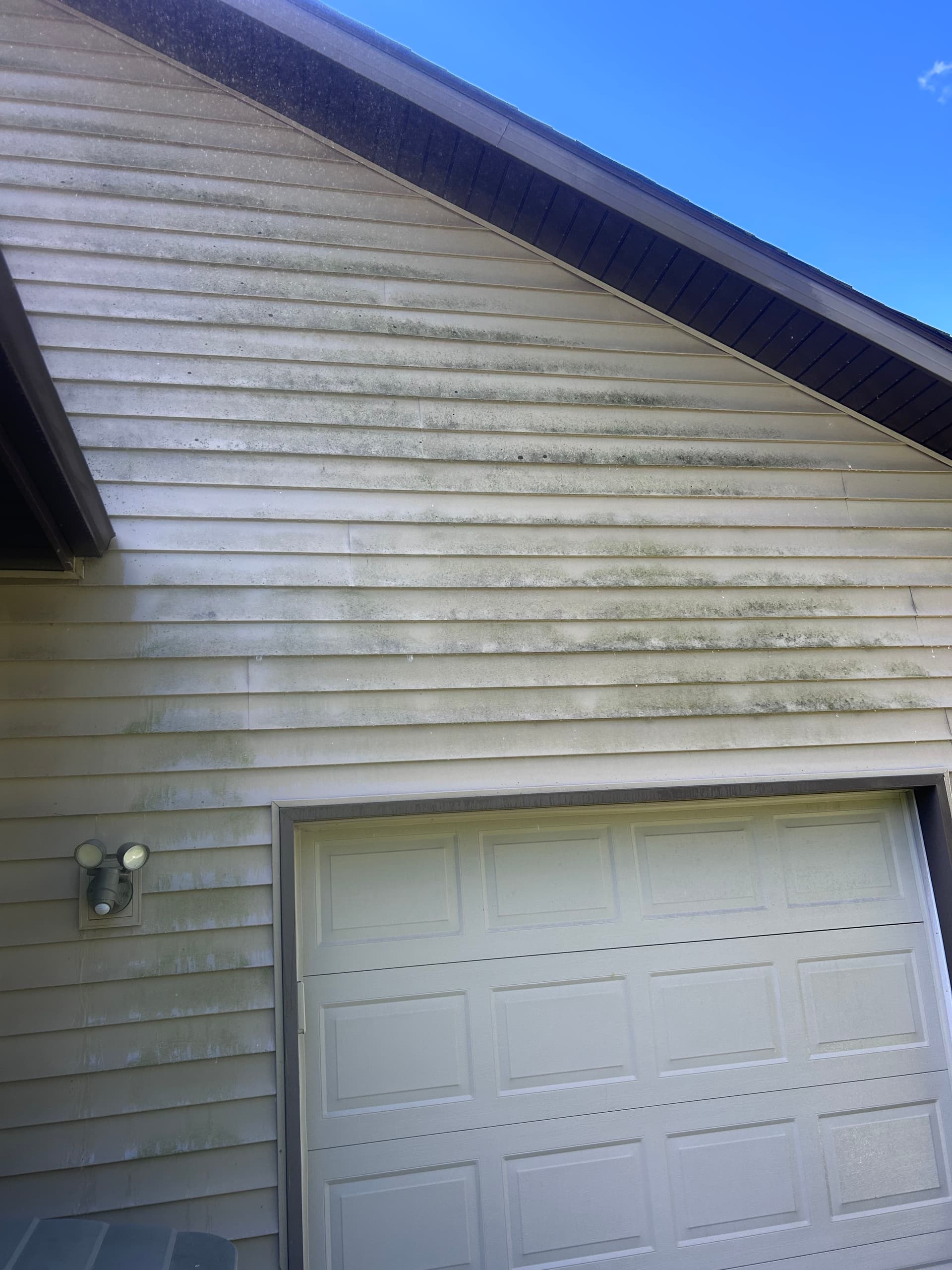
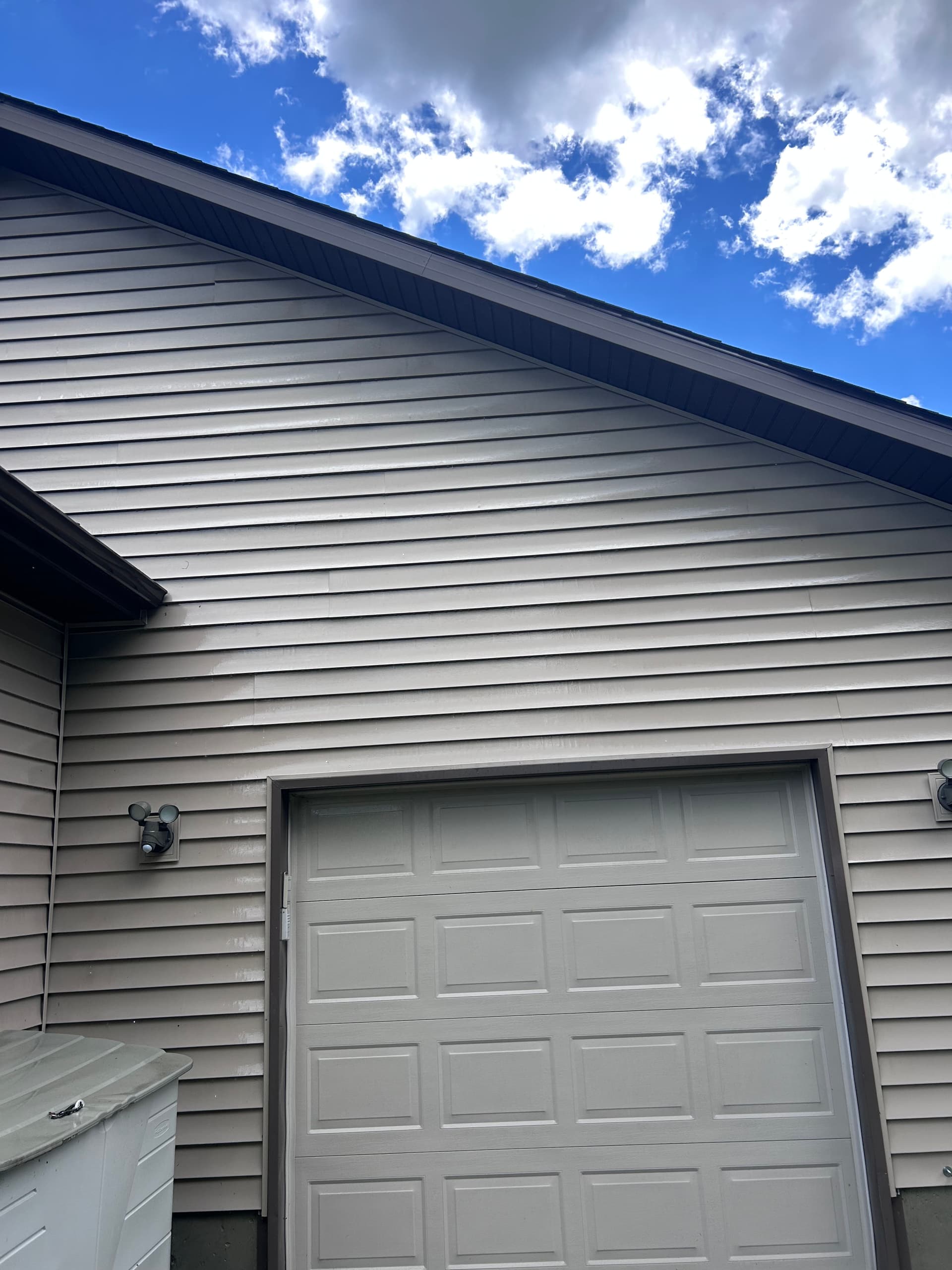
That green and black buildup on vinyl siding is one of those things that sneaks up on you. It starts subtle - a little discoloration here, some dark streaking along the lap lines there - and before long the whole exterior looks dull and dingy. That's exactly what we were working with on this Lansing home.
The siding had years of algae and organic growth embedded into it. You could see it running across nearly every horizontal seam, with heavier buildup toward the upper gable. This is really common on homes that get consistent shade or moisture exposure. Left alone, that growth doesn't just look bad - it can actually work its way into the surface over time.
We use a soft wash process on siding like this. That means low pressure combined with the right cleaning solution, which breaks down the organic material at the root rather than just blasting the surface. The result is a clean that actually lasts, not one that looks good for a month and then comes back just as fast.
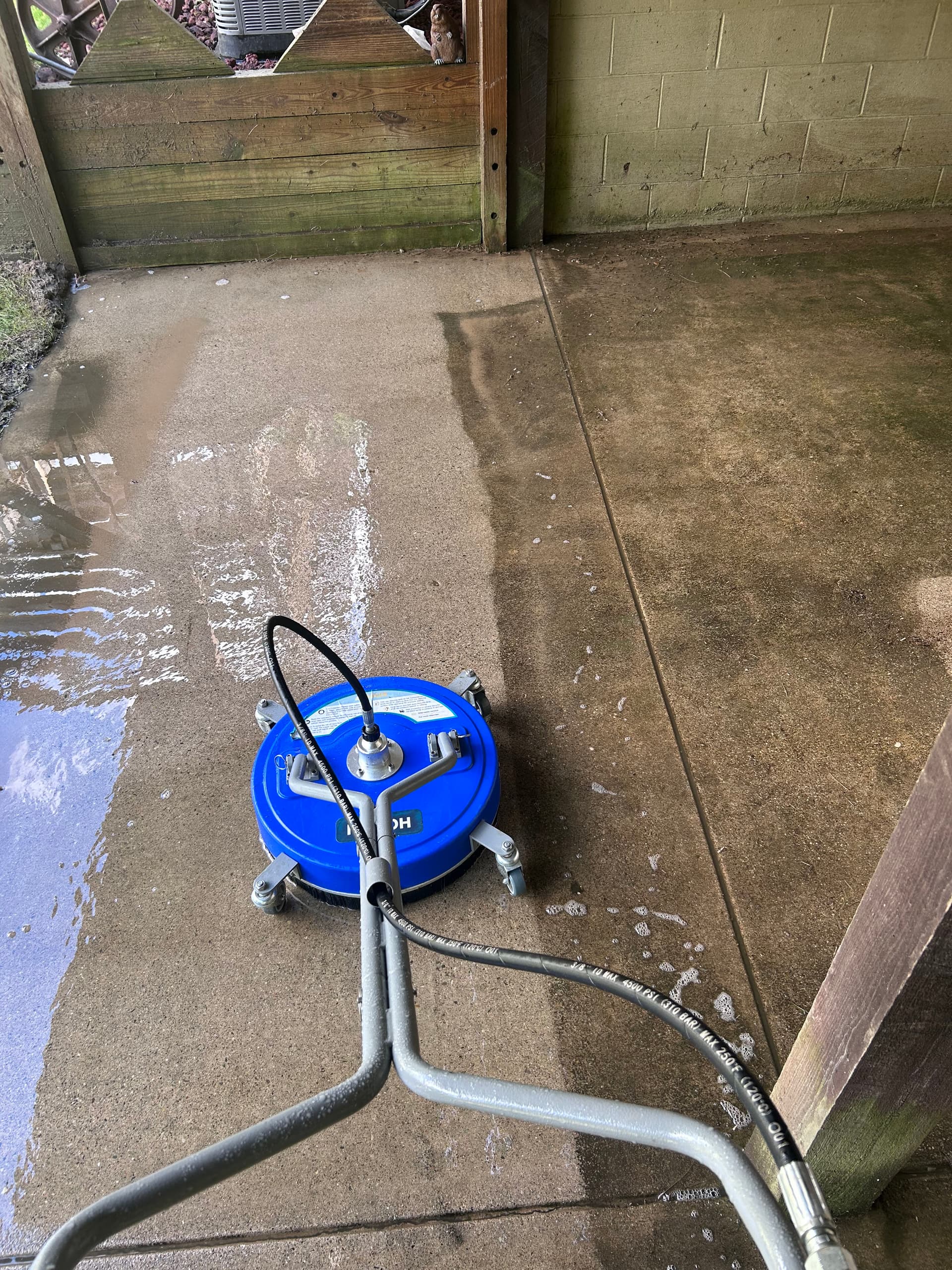
While we were there, we also tackled the concrete with a surface cleaner - the blue rotary tool you see mid-job. That piece of equipment makes a big difference on flat work. It delivers consistent pressure across the entire surface in overlapping passes, which means no streaking and no missed spots. The contrast between the treated and untreated concrete mid-clean shows just how much was sitting on that surface.
By the time we wrapped up, the siding was back to its actual color and the concrete was cleaned edge to edge. A few hours of work, and the whole exterior looked like a different property. That's what a proper house wash does - it doesn't change anything, it just gets rid of what shouldn't be there in the first place.